
How Can a Carriere Distalizer Correct a Bite Before Braces or Clear Aligners?
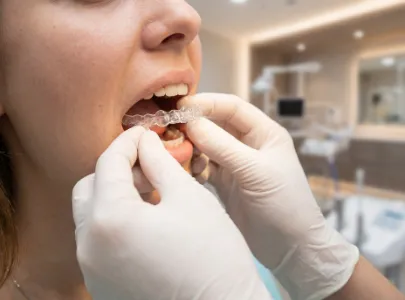
A Carriere Distalizer corrects a bite by gently moving the upper back teeth backward, which improves how the upper and lower teeth meet. This first phase is completed before braces or clear aligners, which then straighten the teeth. The appliance is worn without headgear, and your orthodontist plans and monitors each step. This guide explains how it corrects the bite, which bite problems it treats, why it comes before braces or clear aligners, its benefits, and who is a candidate.
How a Carriere Distalizer Corrects the Bite From the Back of the Mouth
The bite is how the upper and lower teeth meet when you close your mouth. A Carriere Distalizer attaches to the upper back teeth and works against an anchor, often on the lower teeth, so the force moves the upper teeth back instead of pulling other teeth forward. As the back teeth shift, the molar relationship improves, meaning the upper and lower molars fit together more evenly, and room opens up for the front teeth. This movement helps with certain kinds of bite problems.
Overbites and Underbites a Carriere Distalizer Can Treat
A Carriere Distalizer is chosen when the position of the back teeth keeps the upper and lower teeth from fitting together properly. Overbites, underbites, and crowding are the main reasons it is used.
Overbites That Push the Upper Teeth Forward
In an overbite, the upper front teeth sit too far forward or cover the lower teeth too much. Moving the upper back teeth backward helps bring the bite into better balance.
Underbites
In an underbite, the lower teeth sit in front of the upper teeth. For this type of bite, the appliance can be placed on the lower arch to move the lower back teeth.
Crowding That Needs Space
Crowded teeth often lack room to line up. Moving the back teeth back gives the other teeth room to line up. Once the back teeth are in place, the next stage of treatment begins.
Why a Carriere Distalizer Comes Before Braces or Clear Aligners
The distalizer goes first because braces and clear aligners work more easily on a bite that is already in position. Treatment follows a clear order:
- An evaluation and treatment plan come first.
- The appliance is placed.
- The back teeth move gradually into their new position, with progress checked at visits.
- The distalizer arms are removed once the correction is made.
- Braces or Invisalign then finish aligning the teeth.
Carriere Distalizer Bite Correction Benefits
Starting with a Carriere Distalizer changes how the rest of treatment goes. The advantages show up in daily comfort and in the teeth you keep.
Correction Without Headgear
The appliance works from inside the mouth, so there is no headgear to wear at home or in public.
Natural Teeth Kept in Place
The back teeth are moved, not removed, so all of your natural teeth stay in place. That matters most to patients who want to avoid extractions. Whether this approach suits you depends on your bite.
Who Is a Candidate for Carriere Distalizer Bite Correction
Not every bite needs a Carriere Distalizer. An orthodontic evaluation looks at your bite, your teeth, and your treatment goals to confirm whether it fits. Questions about comfort, timing, or what to expect are welcome at that first visit.
Get Bite Correction Started at Connecticut Valley Orthodontics in Vernon and Storrs
At Connecticut Valley Orthodontics in Vernon and Storrs, Dr. Daniels, Dr. Imbriglio, and Dr. Alexander provide the Carriere Distalizer, braces, and Invisalign and Invisalign Teen for children, teens, and adults, with digital impressions. Book a consultation to find out whether a Carriere Distalizer can prepare your bite for braces or clear aligners.
Frequently Asked Questions
How long is a Carriere Distalizer worn?
It is worn for a set number of months, and the exact time depends on your bite and how your teeth respond. Our team gives you a timeline at your consultation.
Does a Carriere Distalizer cause soreness?
Some temporary soreness or pressure is normal as the teeth begin to move, and most patients adjust within a short time. Tell our team if discomfort lasts, and we will check the appliance.
Can you eat normally with a Carriere Distalizer?
Most foods are fine, but sticky and hard foods can damage or loosen an orthodontic appliance, so it is best to avoid them. We will review what to eat at your visit.
How do you clean around a Carriere Distalizer?
Brush after meals and floss carefully around the appliance, since food and plaque can collect there. Our team can show you the right cleaning technique when it is placed.
Can adults have a Carriere Distalizer?
Age is only one factor. Our team treats children, teens, and adults, and we can explain whether this appliance is an option for an adult’s bite.